The Glass Spire
An archivist uncovers the lost heart of Aurelia’s time‑weaving, confronting memory, identity, and the cost of wielding the Book of Enoch.
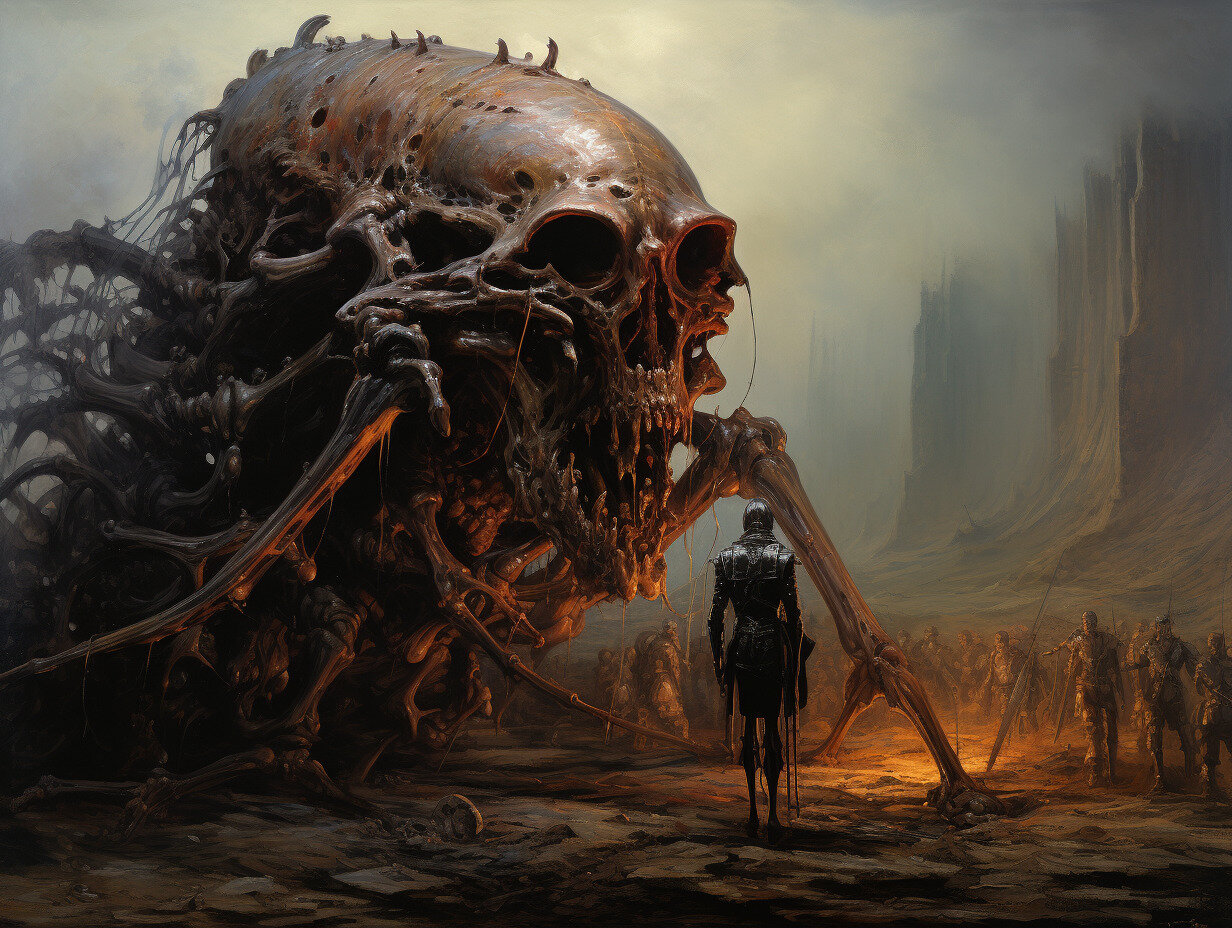
**The Glass Spire**
The wind never sang over the Glass Spire; it howled, tearing at the jagged concrete like a wounded beast. Perched on the rim of the second moon, a place the locals called the Silent Watch, the Spire rose from the basalt plain in a perfect column of polished stone and shattered glass, its facets catching the endless night of Aurelia’s sky. Its interior was a lattice of corridors and chambers, each one lined with shelves that held relics from every age of the star system-weathered maps, cracked chronometers, vials of blackened liquid that pulsed with a faint, chemical rhythm.
Lira Ardent was the archivist who tended the Spire. She was a woman of average height, her hair a tangled mass of ash and copper, her eyes a pale violet that seemed to hold more than one horizon at once. She had arrived at the Spire years before, drawn by rumors of a hidden chamber sealed within the core of the structure-a chamber that held the original, unbroken version of the Book of Enoch, bound not in leather but in the translucent membrane of a long‑dead creature that had once served as a conduit between dimensions.
The Spire had been built by the ancient engineers of the first moon, long before Malachi’s name ever whispered over the cracked throne of Chronos. Its purpose was to monitor the flow of time across the star system, to record the subtle shifts that occurred when the Book’s power was wielded. Over the centuries, the Spire fell into disuse, its mechanisms rusted, its walls overgrown with chemical lichens that emitted a faint, maddening perfume.
Lira moved through the Spire with a lantern that cast a trembling orange glow, its light flickering in rhythm with the low hum that seemed to emanate from the building itself. The hum was not a sound but a pressure, a sensation that made the air thicken and made her thoughts drift like smoke. She had learned to listen to it, to let its rhythm guide her steps.
She reached the central atrium, a vast chamber that opened onto the void of space through a single, unadorned portal of black glass. The portal pulsed with a faint, greenish light, a sign of the dimensional tears that Malachi’s manipulations had opened across the system. In the center of the atrium stood a monolith of obsidian, carved with the same Enochian symbols that appeared on the cover of the Book, but here they glowed with an inner light, as if the stone itself were a living eye.
Lira approached the monolith and placed her hand upon its cold surface. The moment her skin touched it, a cascade of images flooded her mind, not as visions but as raw data, a stream of consciousness that bypassed her rational mind. She saw a child-her own child, a girl with hair the color of molten gold, standing before a crumbling temple on the edge of a desert plain, her eyes wide with terror as a crimson sky erupted in a cascade of fire. The child’s name was Selene, and she was not Lira’s daughter but a memory of a girl who had lived on the planet Aurelia before the great collapse, a time when the star system was still whole and the Book of Enoch had not yet been weaponized.
The memory was accompanied by a fragment of a song, a lullaby that had been lost to history, its melody a mix of ancient hymns and the low drone of the Spire’s core. The lyrics were simple, almost childlike:
*“Stars fall, time bends, Dreams unweave, We are threads in a night’s loom, Torn by hands we cannot see.”*
Lira felt the weight of the memory settle in her chest, a pressure that was both physical and psychological. The Spire’s hum intensified, and the portal’s light flared, revealing a glimpse of a parallel dimension-a realm where angels and demons moved in perfect synchrony, their forms composed of shifting shadows and crystalline structures. In that realm, a figure stood at the edge of a great chasm, its silhouette unmistakably Seraphina, the Queen Mother, but with eyes that glowed with the same black ichor that seeped from the walls of the Cathedral of Unraveling.
Seraphina’s voice echoed through the dimensional rift, not as words but as a feeling, a dread that pressed against Lira’s mind like a cold hand. *“You have found the thread, archivist. The tapestry is fraying. The sacrifice is already made.”*
Lira’s vision snapped back to the present. The monolith’s surface cracked, releasing a thin veil of vapor that swirled around her like a ghostly veil. The vapor carried the scent of ozone and something else-something that smelled like forgotten prayers. As the vapor dissipated, the obsidian monolith shifted, revealing a hidden door that had been sealed by time itself.
Lira stepped through the door and entered a chamber that seemed to exist outside of linear time. The walls were lined with glass vials, each containing a drop of liquid that glowed with a soft, amber light. Inside each vial was a miniature replica of the Book of Enoch, bound in different materials-bone, stone, crystal-each one a fragment of the whole.
In the center of the chamber stood a pedestal, upon which rested a single, unadorned book. Its cover was blank, as if it had never been written. Lira reached for it, and as her fingers brushed the pages, the air thickened with a chemical scent that made her thoughts unravel. She saw herself as a child, standing before the same Spire, but this time she was not alone. Beside her was a figure she did not recognize-Malachi, his eyes hollow, his hands clutching the Book of Enoch, his face twisted in a grin that seemed to stretch across time itself.
The vision ended with a sudden, sharp crack that split the chamber. The pedestal shattered, and the blank book fell to the floor, its pages scattering like shards of glass. The fragments hovered in mid‑air, each one projecting a different image: a map of the star system, a portrait of Seraphina as a young woman, a diagram of the time‑dilation device, a chemical formula for a maddening toxin, and a silhouette of a dimensional tear.
Lira’s mind reeled. The fragments were not random; they were pieces of a puzzle that had been hidden within the Spire for eons, each one a key to understanding the true nature of the Book of Enoch and the power that Malachi wielded. The puzzle was not meant to be solved by any single mind; it was a test, a way to ensure that those who possessed the knowledge would not misuse it.
She realized that the Spire itself was a living entity, a guardian that had been waiting for someone who could piece together its fragments without being consumed by the dread they contained. The hum that had guided her steps now softened, as if the Spire recognized her acceptance of the knowledge.
Lira closed her eyes, and the fragments coalesced in her mind, forming a single, coherent picture. The Book of Enoch was not a weapon but a record-a chronicle of the moments when reality itself had been stretched, when time had been bent, when the boundaries between dimensions had been tested. It was a warning, a reminder that the power to manipulate time and space came with a cost: the erosion of identity, the dissolution of self, the surrender to the unseen horrors that lurked beyond the veil of perception.
She opened her eyes to see the Spire’s portal now dim, its light fading. The monolithic door behind her sealed shut, as if the Spire had decided that its secret had been shared. Lira stood in the atrium, the weight of the knowledge pressing against her, but also a sense of purpose. She understood that the true battle was not against Malachi’s temporal weapons or the chemical insanity that plagued the moons, but against the fear that lived within the minds of those who sought to wield such power.
She turned away from the Spire, her silhouette merging with the night sky, and walked back down the spiral staircases that wound through the structure. As she descended, the wind howled no longer a song but a warning, carrying with it the faint echo of the lullaby she had heard in the memory. It was a reminder that even in the darkest of times, the threads of reality could be rewoven-if one had the courage to face the void and the willingness to accept the sacrifice that had already been made.
Lira emerged into the cold, star‑filled expanse of the second moon, the blood‑red horizon behind her. She knew that the world would continue to change, that the tears in reality would widen, that the dread would never truly be eradicated. But she also knew that as long as there were those who could listen to the whispers of the Book, who could piece together the fragments of time and memory, there would always be a chance to hold the cracks together, to keep the terror at bay, and to preserve whatever remained of humanity’s fragile identity in a universe that threatened to unravel it.