The Chronos Labyrinth of Echoes
A queen mother confronts a fractured timeline as the Book of Enoch bleeds into her mind, turning the brutalist citadel into a living memory of dread.
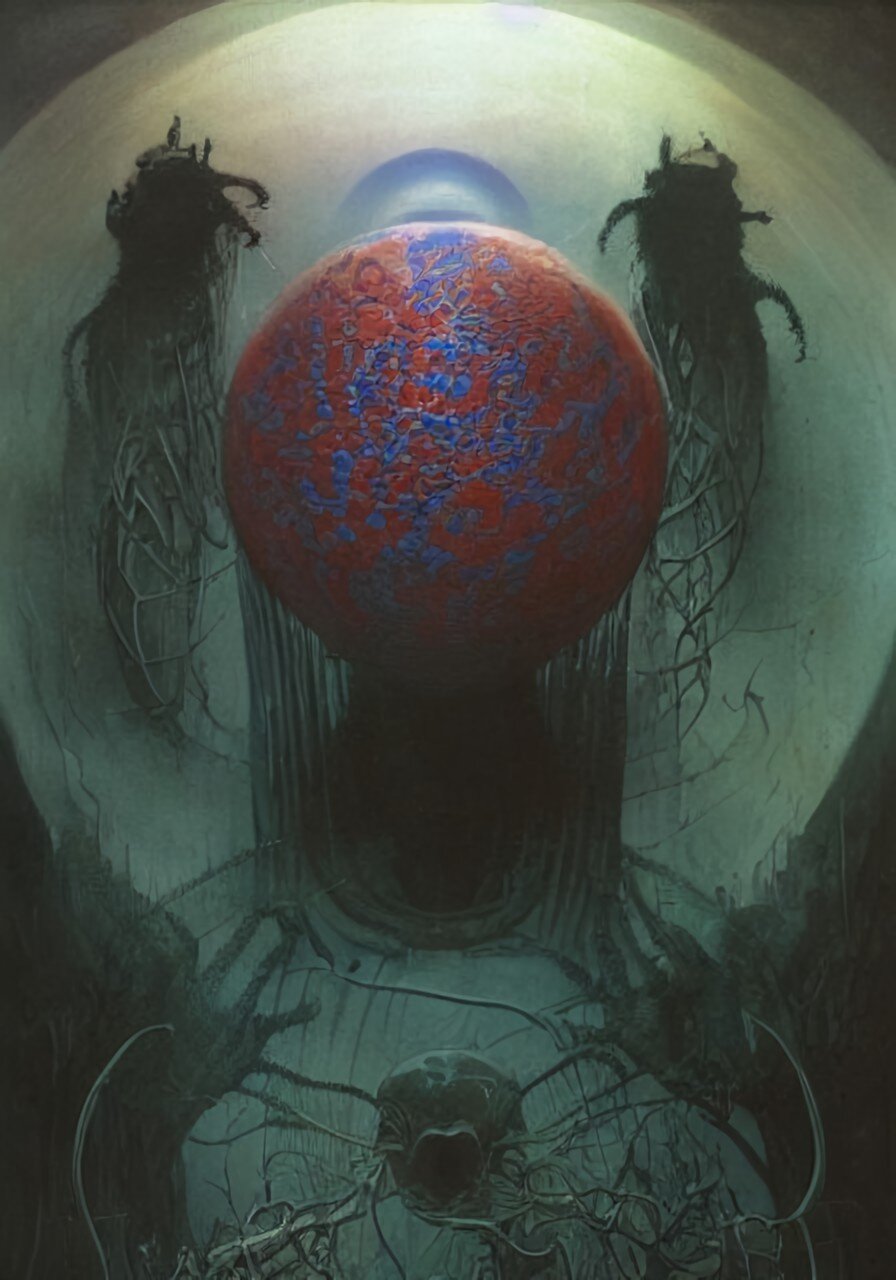
**The Chronos Labyrinth of Echoes**
The air in the lower vaults of the Chronos Citadel was never truly silent; it sang a low, droning hum that rose from the concrete itself. Seraphina, the Queen Mother known as the Burning One, moved through the endless corridors with a purpose that was half ritual, half survival. The brutalist architecture-monolithic slabs of poured concrete, angular cantilevers that seemed to defy gravity, and stairways that spiraled into darkness-had been designed to imprison both bodies and thoughts. The Baron Malachi had turned this prison into a weapon, and now the weapon breathed.
She stepped over a cracked floor where a thin film of chemical haze lingered like a ghostly veil. The haze was a remnant of the Baron's experiments, a cocktail of volatile compounds that turned the air itself into a slow-acting neurotoxin. Inhaling it did not cause immediate pain; it caused the mind to unravel in subtle ways. Seraphina felt the faint metallic tang on her tongue, a reminder that the chemicals were still active, still waiting for a mind unprepared to fight them.
Ahead, the massive doors of the Hall of Echoes stood ajar, their rusted hinges groaning under the weight of centuries. The hall was lined with monolithic pillars that bore faint glyphs-schematic diagrams of chronal engines, maps of temporal currents, and fragments of the Book of Enoch etched into the stone. The Book was not just a relic; it was a living conduit, a lattice of light that pulsed in rhythm with the Baron's heartbeat. Its pages fluttered in the dim light, each page a thin slice of time that slipped past the walls like smoke.
Seraphina reached out, her fingers trembling. The surface of a nearby pillar warmed beneath her touch, not with heat but with a slow, oppressive pressure. Time seemed to thicken around her, each second stretching into a viscous thread that threatened to swallow her whole. She could feel the dilation in her own pulse; her heart hammered in slow, deliberate beats that matched the cadence of the Book's light. The Baron had taught her that time dilation was not just a physical phenomenon but a psychological weapon-one that could make a person believe that an eternity had passed while only minutes had elapsed in the outside world.
She turned her gaze upward. The ceiling of the hall was a series of massive, interlocking beams that formed a jagged sky. In the distance, a fissure yawned in the concrete, a thin seam that pulsed with a faint, otherworldly glow. This was the dimensional tear the Baron had spoken of-a crack through which entities from parallel dimensions could slip into her world. The tear did not scream; it whispered, a sound that resonated in the back of Seraphina's mind. The whispers were not words but feelings: a sense of infinite patience, a hunger for order, a cold calculation that seemed to come from a place far beyond human comprehension.
The chemical haze around her intensified. It was not just a poison; it was a catalyst. The chemicals amplified the Baron's temporal manipulations, making the already sluggish flow of time feel like a river of molasses. Seraphina's thoughts slowed, each idea taking longer to form, each memory slipping through her grasp like sand. She could still hear the low hum of the citadel, but it now sounded like a distant drumbeat that she could not quite sync with her own breathing.
She forced herself to focus on the present. The scent of ozone and rust, the feel of the rough concrete under her palms, the faint pulse of the Book of Enoch against her skin. She remembered the stories her mother had told her about the ancient guardians of Aurelia, about the way the stars had once aligned to reveal a path through the veil. Those stories were not just legends; they were tools. By recalling them, she could anchor herself to a timeline that the Baron was trying to erase.
As she walked deeper into the hall, the pillars began to shift. Some melted into the floor, others rose like skeletal fingers, pointing toward the dimensional tear. The architecture itself seemed to respond to her presence, as if the brutalist labyrinth was a living organism that had been programmed by the Book's power. The air grew colder, not because of any draft but because the chemicals had begun to interact with the chronal energy, creating pockets of temporal stasis.
Seraphina heard a faint voice, not from the Book but from the walls themselves. It was a whisper that seemed to come from every direction at once, a chorus of fragmented memories: children laughing in a courtyard that no longer existed, soldiers marching through a city that had been erased by time, the soft rustle of pages turning in a library that had never been built. The voice spoke of a moment when the Baron first seized the Book, a moment of pure, unfiltered dread that had seeped into the very stones of the citadel.
She felt a surge of terror, not because she feared death but because she sensed the erosion of her own identity. The chemicals, the time dilation, the dimensional entities-all of them were working together to dissolve the boundaries between who she was and who the Baron wanted her to become. She could see her reflection in a puddle of stagnant water, but the reflection was not her; it was a version of herself stretched thin, eyes hollow, voice a echo of her own name.
In that instant, the Book of Enoch flared brighter. Its light burst through the fissure, a cascade of pale energy that seemed to tear the fabric of reality apart. The dimensional tear widened, revealing a vista of endless night dotted with stars that were not from her sky. Through that vista, silhouettes moved-angels and demons, not as traditional figures but as manifestations of pure temporal and chemical chaos. They moved with purpose, their forms shifting as if they were made of the same temporal flux that Seraphina was experiencing.
The Baron's voice boomed from the speakers embedded in the walls, a voice that was both his and many others, layered like a choir. "You cannot escape what you have created, Seraphina. The labyrinth is yours now."
Seraphina clenched her fists, feeling the concrete crack beneath them. She understood that the fight was not just against Malachi but against the very nature of time itself-a nature that could be weaponized, that could be twisted to produce endless dread. She realized that the chemical haze was not just a weapon; it was a reminder that the world she protected was built on fragile foundations, foundations that could be eroded by the very technologies that gave her power.
She took a breath, the air thick with chemicals and chronal energy. She whispered to the ancient guardians, not in words but in the rhythm of her heartbeat, a rhythm that matched the pulse of the citadel. "We are not broken, we are unbroken."
The fissure pulsed, and for a brief moment, the temporal distortion cleared just enough to reveal a glimpse of a different version of herself-one that stood at the edge of a horizon where the stars were different, where the brutalist architecture was replaced by something softer, something hopeful. That vision faded as quickly as it appeared, but it gave her a taste of what could be if the dread were undone.
Seraphina turned away from the tear, her resolve steeled. She knew that the next steps would be harder, that the Baron would not give up his hold on Chronos without a fight. She felt the weight of the Book's power pressing against her, a pressure that was both a burden and a promise. The chemical haze still clung to her, but she no longer felt it as a poison; she felt it as a reminder of the cost of power, of the price of playing god.
She moved deeper into the labyrinth, each step echoing with the sound of her own heartbeat and the low hum of the citadel. The next voice would be hers, a voice that would challenge the Baron's control, that would seek to restore the balance between time and reality, between chemical warfare and the fragile sanity of those who survived it. The labyrinth would continue to twist, but now she walked it with a purpose that was rooted not in fear but in the stubborn hope that even the darkest temporal currents could be navigated.